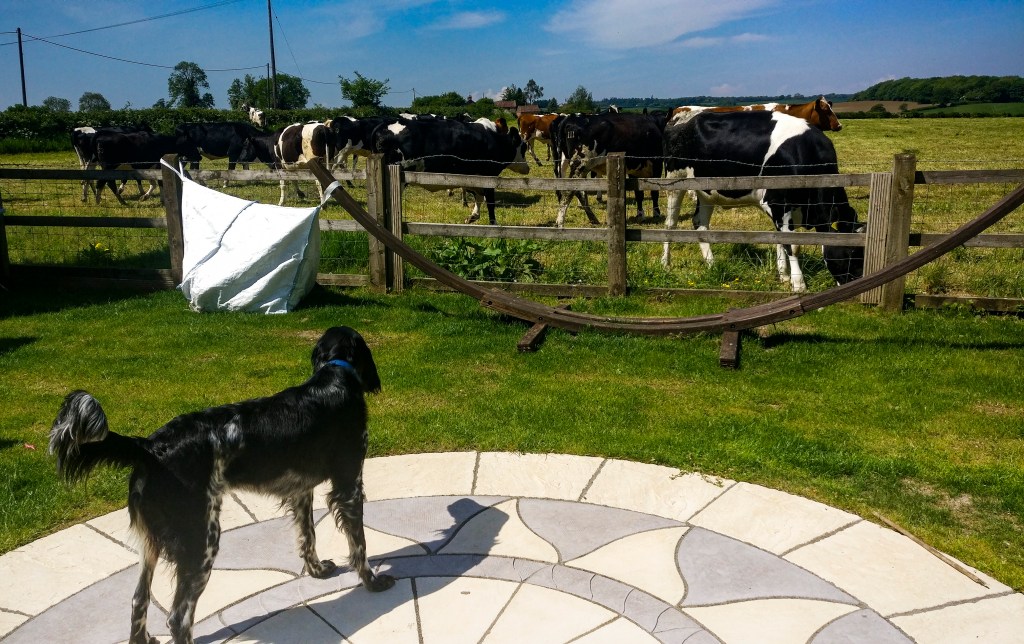
Sorry neighbours….. Alfie has been a bit vocal today. Some heifers were very inquisitive today, looking over the back fence (not to mention eating one of our tree’s).
Alfie took it upon himself to tell them off, from a safe distance of course, on numerous occasions.
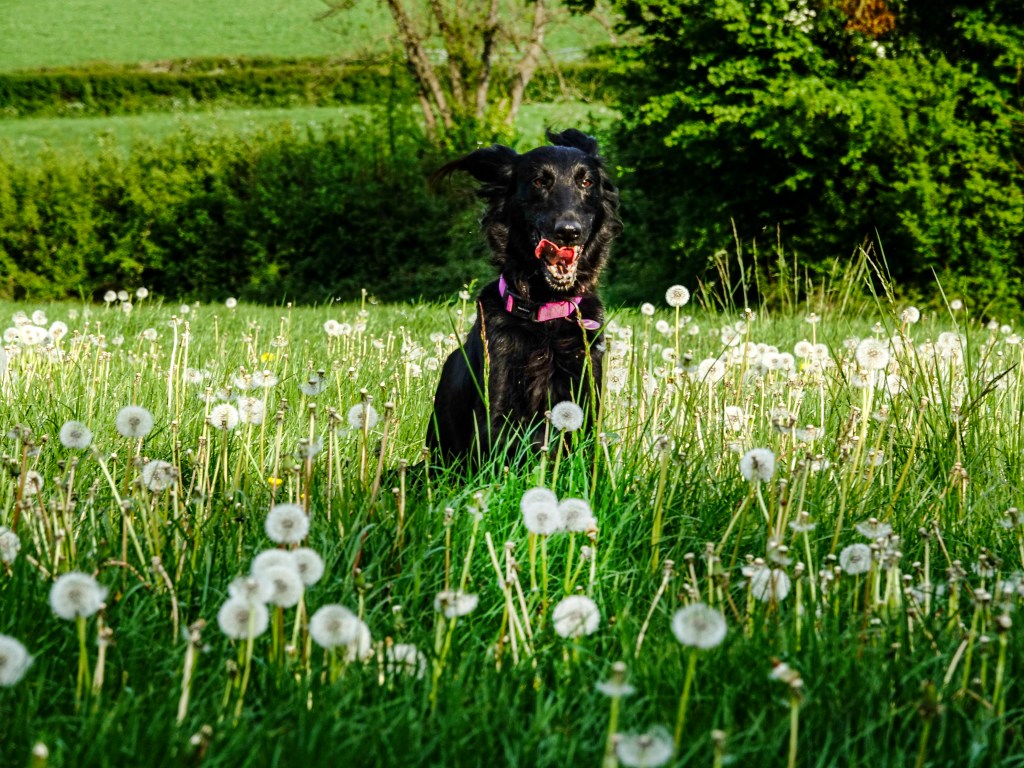
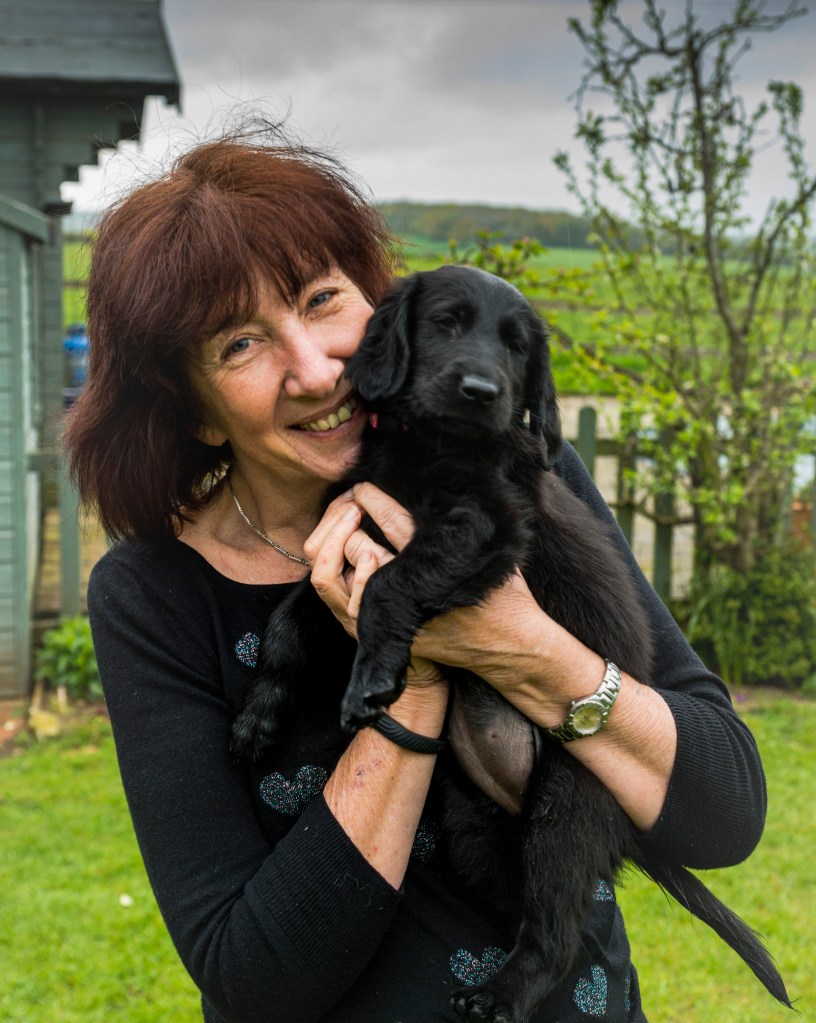
Today’s post features our nutty flatcoat retriever, Velvet. This picture sums her up perfectly, and she is still going strong at nearly 11 years old.
She is a real character and we could literally write a book about her antics, especially when she was younger.
One of her most famous party tricks is opening doors. We tried a privacy lock on a few but she soon sorted them out, which meant putting bolts on the doors five foot up. That did stop her. well most of the time. She somehow knows when we forget, but she doesn’t open the door straight away, she waits until we are out of the room so she doesn’t get busted.
On one occasion we didn’t remember, and she broke into the kitchen, opened a cupboard and ate a 1kg bag of flour. Other items taken includes a family pack of Yorkie bars, countless eggs, sugar, bread, fruit, in fact anything she can get those paws on.
If anything is left on the worktop, that is fair game. Standing on her rear legs, she uses her front legs in a sweeping motion to get everything on the floor, much to the appreciation of the other dogs.
Another trick of hers was jumping the rear fence, running through the field at the back, up the lane and into the pub’s kitchen (usually on a Sunday when roast dinners were being served). The front door bell would ring and she would be kindly delivered back to us by a member of the pubs staff.
We love her dearly, and although she is slowing slightly, and missing some teeth, she is still as mad as a box of frogs.
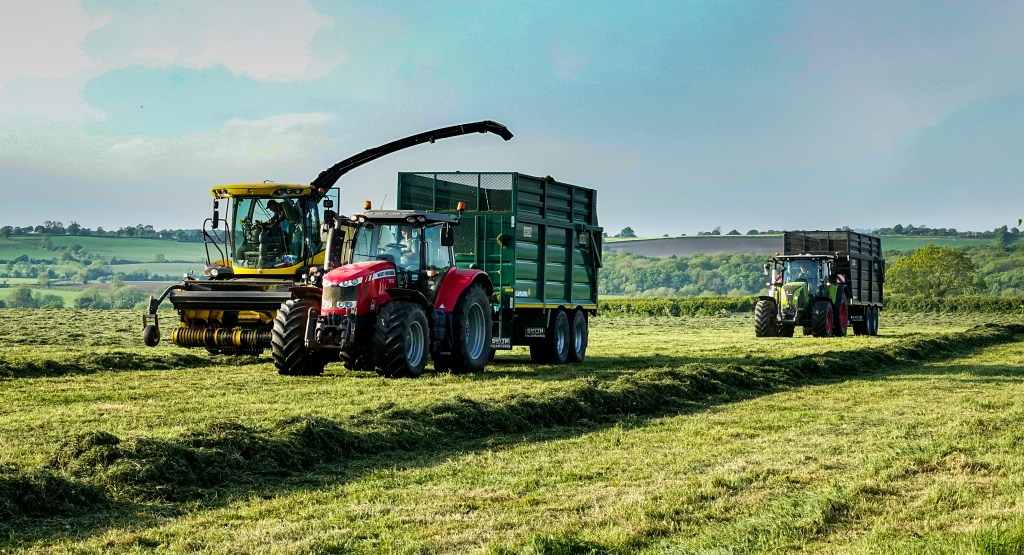
Today’s photo is of our neighbour cutting his grass…. makes my task look simple, but the old saying ‘make hay whilst the sun shines’ seems incredibly relevant during the lock-down period.
There seems to be 2 schools of thought on what to do during the lock-down, be bored, sit and worry, or use the time to complete things you just didn’t have time to do before, including developing skills ready for the future.
I feel really sorry for the people who can’t use this additional free time to see opportunities. I completely understand that money may be tight, but there is huge amounts of information online which is free of charge for people to develop themselves (even if it’s to find a new hobby).
Anyway, I hope you are all happy, healthy and safe. Be positive and smile, the good days will be back soon.
Well, I have only just recovered from the injuries sustained after the last post (written ages ago) about the wife’s bush, so thought I’d play it safe this time.
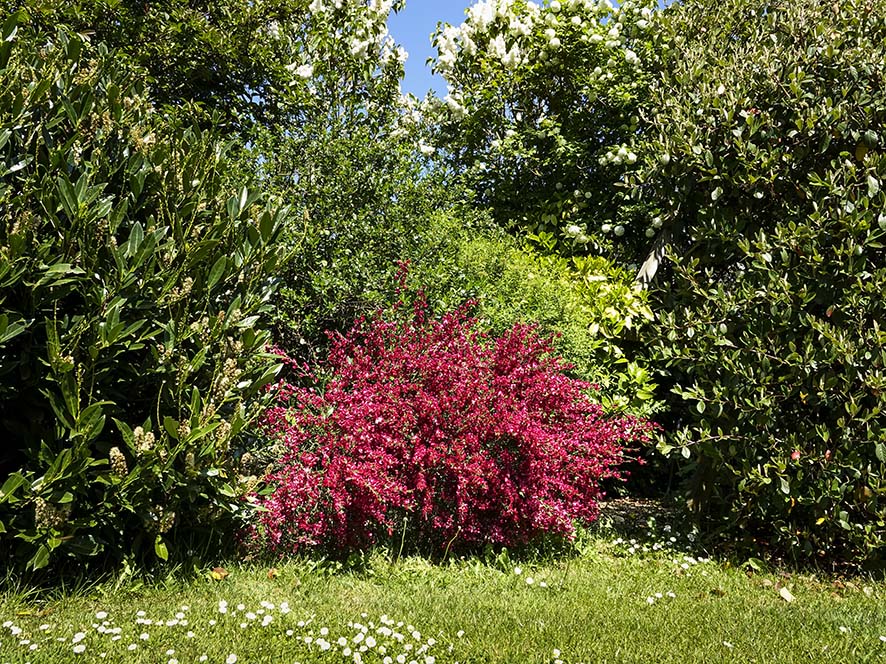
Whilst we love travelling and being out and about, one of the things you do miss is the different plants at different times of the year. This Broom (Cytisus praecox Hollandia, has been so vivid this spring. It is just about to go over so I thought I’d capture it before it’s too late. It is very insect friendy and grows well in most soil types.
4 years ago this little bundle of joy arrived in our home.
Being the niece of Velvet, we thought their temperament would be similar…. How wrong could we be.
Callie is a very chilled dog, loves / craves attention, and is incredibly loyal. She is full of energy and is brilliant at coming back when called (unless she is chasing a hare or pheasant).
She can be a bit funny with other dogs initially. When we first met Alfie, she told him off a few times. Alfie’s original owner was really apprehensive, but we reassured him that she would come around. They are now best buddies, and Callie has helped train Alfie to come back to the whistle (sometimes 🤣).
We are incredibly fortunate to have her in our lives.
I was sat contemplating what today’s photo story would be about when ….. Ping …. An IM arrives from my lovely neighbour…. “Have a look at the sky”.
Well I see why. The sun setting over the horizon this evening was amazing, with the ferocious sun against a dark sky.
Each time the sun goes down we should thank our lucky stars that we have lived that day. Especially these days, when thousands worldwide lose their lives due to the invisible enemy. Live each day to the full, be kind, make someone smile, but most of all enjoy life, you only get one. Stay safe and well.
Whilst sitting and talking to my wife about what today’s photo post would be about, the photo below landed in my inbox.
If you look closely you can see a headset plugged into my phone. I have dabbled with the guitar for quiet a few years (on and off), but figured that it might be a good time to start playing again.
I have found an app which I really like. It gives you exercises, and songs to play along with, but it listens and gives feedback when you hit a bum note. You can also practice an exercise at a slower speed, and it prevents you from progressing until you have nailed the exercise. It may take me a while to get through the course but I’m enjoying it. Not sure the wife or neighbours are though.
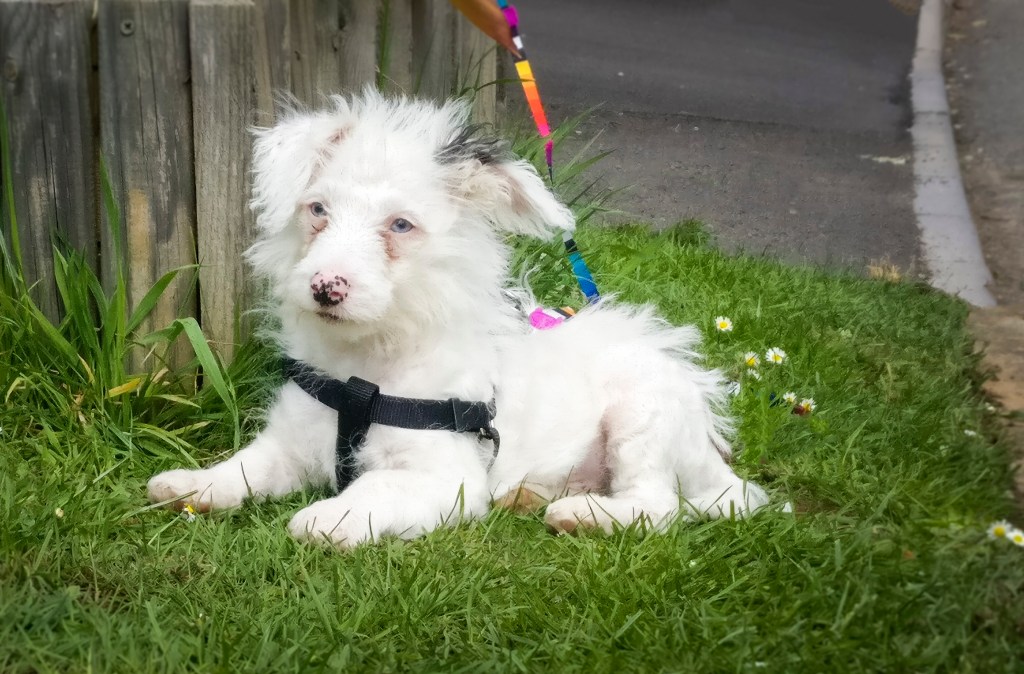
Well, we had a treat today. Whilst working our in the front garden Jayne and Nigel walked by (keeping 2m away) with their new little terrier/poddle/etc pupster called Monty. At just 14 weeks old, he is very cute.
Ours were in the back garden so he wasn’t terrorised, not that they would hurt him but they are giants compared to Monty.
You meet and chat to so many nice people as a dog owner, and when we first moved to the village we knew more names of dogs than their owners. I recall coming back from a walk and saying “I saw Fido’s mum” or “I saw Shep’s dad”.
Welcome to the village Monty – Hope to see you out soon…
Another plant today, but why is it called a cowslip? Even with my weird imagination I can’t vision a cow slipping on a little delicate flower, so it’s back to T’internet.
Most sites suggest it is derived from the old English for cow dung, known as cow slop, as they are associated with cow meadows.
It’s botanical name is Primula veris, and is part of the primrose family. The flowers have a very distinctive and fresh fragrance and somewhat narcotic juices, which have given rise to their use in making the fermented liquor called Cowslip Wine, which had formerly a great and deserved reputation and is still largely drunk in country parts, being much produced in the Midlands. It is made from the ‘peeps,’ i.e. the yellow petal rings, in the following way: A gallon of ‘peeps’ with 4 lb. of lump sugar and the rind of 3 lemons is added to a gallon of cold spring water. A cup of fresh yeast is then included and the liquor stirred every day for a week. It is then put into a barrel with the juice of the lemons and left to ‘work.’ When ‘quiet,’ it is corked down for eight or nine months and finally bottled. The wine should be perfectly clear and of a pale yellow colour and has almost the value of a liqueur. In certain children’s ailments, Cowslip Wine, given in small doses as a medicine, is particularly beneficial.
Young Cowslip leaves were at one time eaten in country salads and mixed with other herbs to stuff meat, whilst the flowers were made into a delicate conserve. Cowslip salad from the petals, with white sugar, is said to make an excellent and refreshing dish.
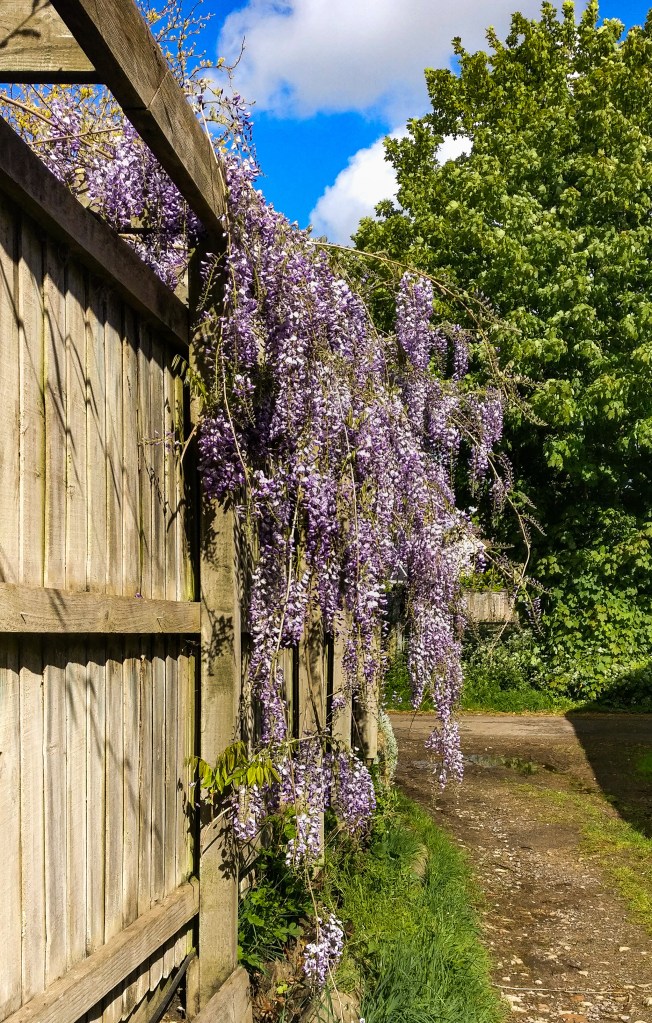
Today’s picture is of a wisteria that I walk by most days whilst taking the dogs out. It is looking very beautiful at the moment. I’m not much of a botanist, so much of the post has been found by doing some online searches.
Wisteria is a woody vine and is part of the Legume family which includes peas, beans, lentils and clover). It can reach 65 feet in height and 32 feet in width. It has smooth or hairy, grey, brown or reddish coloured stem which twines around nearby trees, shrubs and various man-made structures.
There are 2 main types of Wisteria (10 in total). If it twines its stems clockwise (seen from above), it’s probably a Japanese Wisteria (W. floribunda). The Chinese Wisteria (W. sinensis) however, twines counterclockwise – and this is the most common one in the UK.
Although hardy and fast-growing, Wisteria grown from seed can take decades to bloom. Gardeners are therefore most likely to buy and grow plants from root cuttings or grafted cultivars.
The seed of all members of this genus is poisonous. The bark contains a glycoside and a resin that are both poisonous. The seed and seedpod contains a resin and a glycoside called wisterin. They have caused poisoning in children of many countries, producing mild to severe gastro-enteritis.



 New day - New Photo challenge